Make this make sense for you
What people mean by the skin barrier
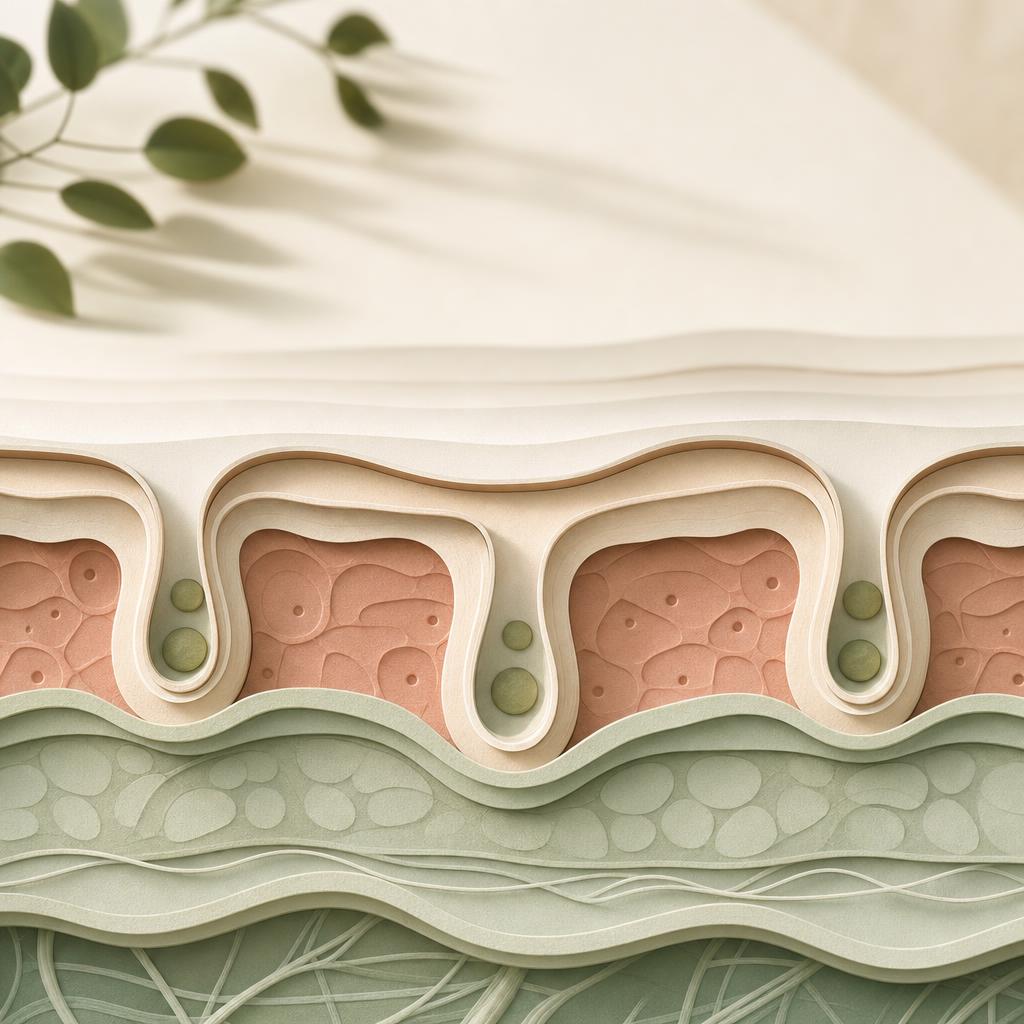
The outermost skin layer, the stratum corneum, is often compared with bricks and mortar: flattened skin cells sit within a mixture of lipids, including ceramides. Together they slow water loss and help limit entry of irritants and microbes.
A barrier under strain may feel tight, rough, itchy or unusually stingy, especially when products or water touch it. These signs overlap with eczema, allergy and other conditions, so persistent or severe symptoms should not automatically be labelled a damaged barrier.
Why acne routines can become irritating
Retinoids, benzoyl peroxide and exfoliating acids can cause dryness, peeling or redness, particularly when several are started together. Scrubs, hot water, frequent washing and alcohol-heavy products may add irritation without treating more of the acne process.
Irritation is not evidence that a treatment is working. Inflamed, uncomfortable skin often leads people to stop treatment altogether, while a tolerable schedule is easier to maintain. More products and stronger percentages are not automatically more effective.
- Introduce one active product at a time.
- Begin at a frequency your skin can tolerate rather than aiming for daily use immediately.
- Avoid adding scrubs or extra acids to remove treatment-related flakes.
A barrier-supportive acne routine
Keep the foundation plain: a gentle cleanser, a moisturizer and broad-spectrum sunscreen, plus one acne treatment chosen for your main concern. A fragrance-free moisturizer with humectants and lipids such as ceramides can reduce dryness; the texture should simply be one you will use.
Applying moisturizer before or after a retinoid can improve comfort for some people. If skin becomes sore or persistently red, pause irritating extras and seek product-specific advice from a pharmacist or clinician. Follow medication directions rather than a social-media schedule.
Support is not the same as treatment
Moisturizer can support comfort and treatment adherence, but it does not replace an acne treatment when one is needed. Likewise, an oily skin type can still become dehydrated or irritated; oiliness is not a reason to skip moisturizer.
If gentle products continue to burn, or there is swelling, blistering, crusting or an itchy spreading rash, stop the suspected product and obtain medical advice. Those features are not a routine adjustment goal.
Key takeaways
- • Barrier care supports comfort and consistency; it is not a stand-alone cure for acne.
- • Stinging and peeling are reasons to simplify, not to exfoliate harder.
- • A gentle cleanser, moisturizer, sunscreen and one targeted active are often enough.
Consider professional advice if
- • Products cause swelling, blistering, crusting or a spreading itchy rash
- • Even bland products continue to burn or the discomfort interferes with sleep or daily life
- • You cannot tolerate an acne treatment despite reducing frequency and using moisturizer